

Email infrastructure discussions often mix two different things: provider requirements and operator tactics. The distinction matters because secondary domains, warm-up tools, and low per-inbox volume caps are not statutes or universal Gmail rules.
What Google publishes
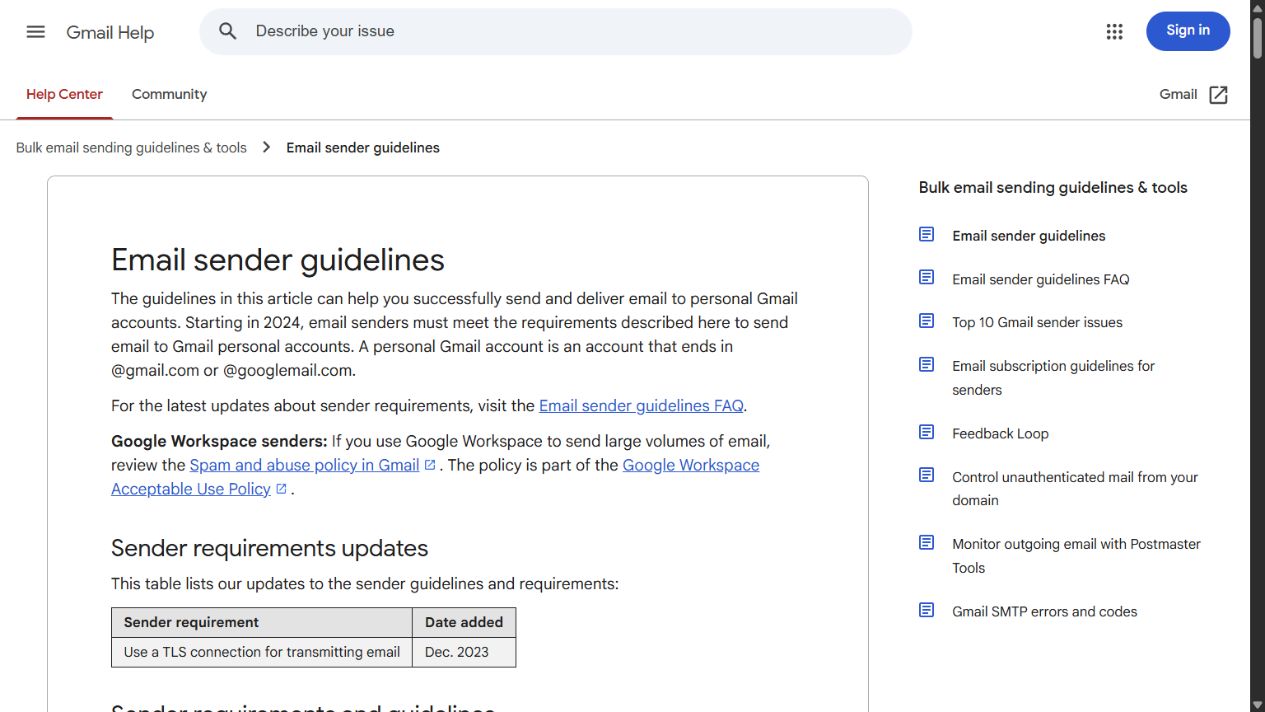
Google’s sender guidelines apply to messages delivered to personal Gmail accounts. Requirements vary by sender volume, with additional rules for bulk senders.
| Area | Conservative summary |
|---|---|
| Authentication | Configure SPF or DKIM for all senders; bulk senders must configure SPF, DKIM, and DMARC. DMARC alignment can pass through aligned SPF or aligned DKIM. |
| DNS | Sending domains and IPs should have valid forward and reverse DNS records. |
| Transport | Use TLS for message transmission. |
| Message format | Follow RFC 5322 formatting requirements. |
| Unsubscribe | Marketing and subscribed messages from bulk senders require one-click unsubscribe support and a visible unsubscribe link. |
| Spam rate | Google advises keeping the Postmaster Tools rate below 0.1% and avoiding 0.3% or higher. |
These are provider requirements and recommendations—not legislation. Google describes messages as potentially rejected, rate-limited, or marked as spam when requirements are not met. It does not guarantee an identical outcome for every domain at a single threshold.
What operators choose
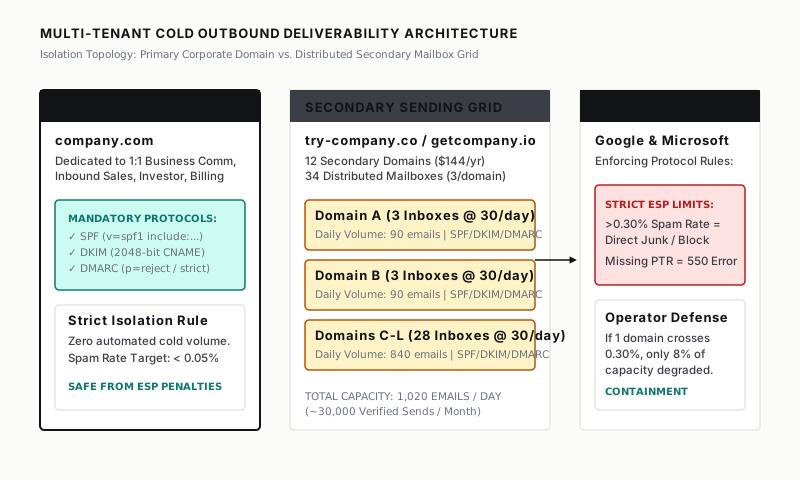
The following practices may help isolate reputation or control volume, but Google does not require them:
- registering secondary sending domains;
- limiting each mailbox to 25–40 outbound messages per day;
- spreading campaigns across multiple mailboxes;
- using third-party warm-up networks;
- reserving the primary corporate domain for one-to-one and operational email.
These choices do not turn unsolicited email into wanted email. List relevance, lawful processing, accurate identity, working opt-out, bounce control, and recipient response remain central.
Spam-rate arithmetic needs context
One complaint from 300 delivered messages is 0.333%; one from 1,000 is 0.100%. The arithmetic is correct, but Postmaster Tools reporting volume, domain reputation, recipient population, and other signals affect what the number means operationally.
How to build an honest cost model
A credible total-cost model should show:
- target monthly delivered volume;
- messages per active mailbox per day;
- number and price of domains;
- mailbox provider and current first-party or reseller price;
- sequencing software cost;
- verification, monitoring, and staff costs;
- replacement and failure assumptions.
Do not label a reseller mailbox price as an official Google or Microsoft plan price. Recalculate from the live pricing pages before making a purchase decision.
Operational priorities
- Authenticate correctly and monitor the real sending domains.
- Keep suppression and unsubscribe handling synchronized across tools.
- Verify addresses and remove hard bounces quickly.
- Measure recipient complaints and positive replies, not only send volume.
- Reduce or stop sending when quality signals deteriorate.