

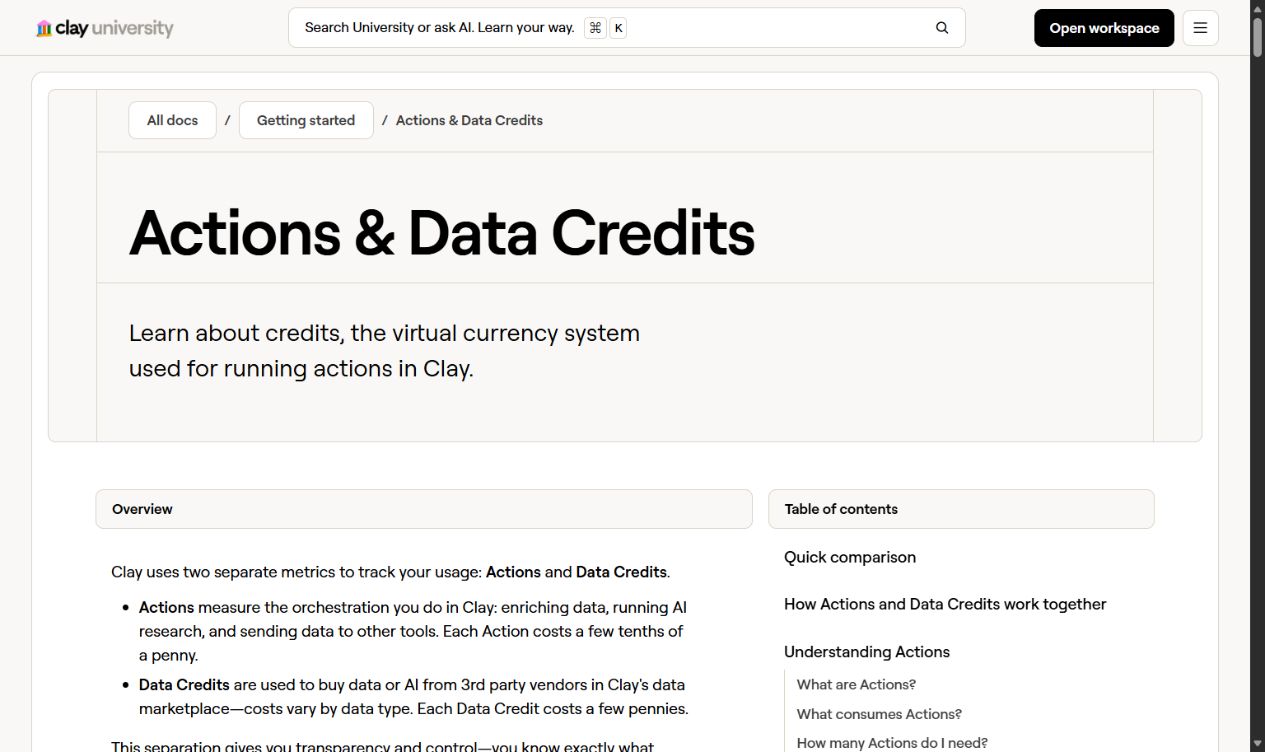
Clay separates usage into Data Credits and Actions. That distinction matters, but it does not produce one universal cost-per-lead formula.
The two meters
Data Credits
Data Credits apply to eligible third-party data and enrichment operations in Clay’s marketplace. The amount depends on the provider and operation. Some enrichment products charge only on a successful result; that rule should be verified for the specific integration rather than assumed across the platform.
Actions
Actions apply to eligible workflow operations. Clay’s current documentation also lists operations that do not consume Actions, including imports, formulas, filters, list operations, and some table-management tasks.
That means a row entering a table should not automatically be counted as one Action, and a copied formula should not automatically be treated as a billed rerun.
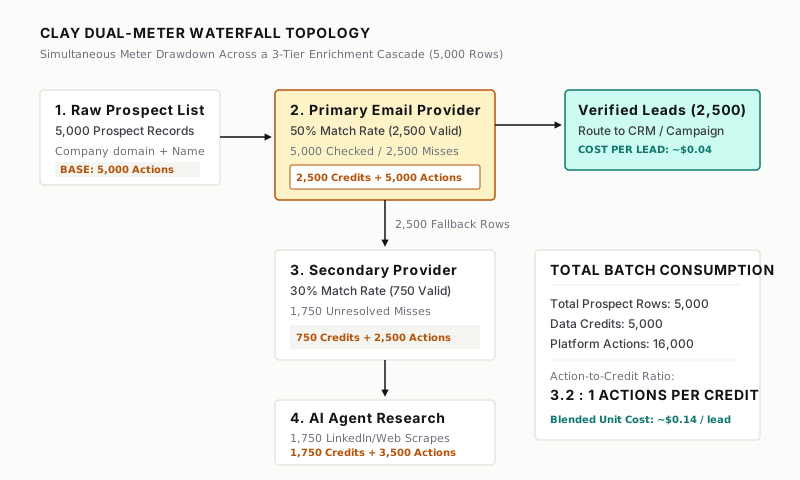
Why a universal ratio is misleading
An “Actions per Data Credit” ratio changes with:
- provider and enrichment type;
- match and fallback rates;
- AI model and prompt design;
- CRM, sequencer, or webhook operations;
- plan allowances and current pricing;
- whether a workflow is rerun or gated;
- which operations Clay currently meters.
A hypothetical waterfall can explain branching, but it cannot establish a typical ratio or dollar cost without measured run data. The earlier 3.85:1 example on this site incorrectly counted imports and formulas as billed Actions and has been removed.
A defensible cost test
- Select a representative sample—such as 100 rows—from the actual campaign population.
- Record the starting Data Credit and Action balances.
- Run one column or provider step at a time.
- Record matches, misses, Data Credits, and Actions after each step.
- Separate free table operations from metered enrichments and integrations.
- Calculate cost per usable output using the plan’s current effective prices.
- Repeat the test if the provider mix, prompt, or routing logic changes.
Workflow design principles
- Gate expensive enrichments behind evidence that the row is in scope.
- Run company-level research once, then reuse it across relevant contacts.
- Stop a waterfall after a valid result instead of querying every provider.
- Test changes on a small frozen sample before applying them to a full table.
- Keep a run log so later costs can be tied to actual logic rather than memory.
Clay’s live documentation and pricing page remain the authority for which operations are metered and how plan allowances work.